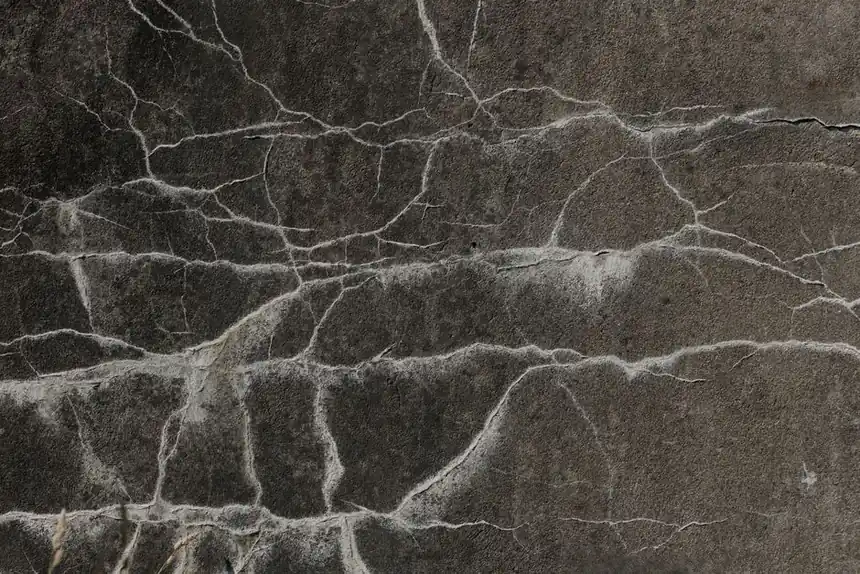
A slab leak damages your foundation in Olathe by releasing water under the concrete, which saturates the clay soil, causes it to swell and shift, and cracks the slab from below. The damage starts within days of the leak beginning - not months - because Olathe's expansive clay soil moves fast when it gets wet. This post breaks down exactly how that process works, the signs to watch for, what 2026 repair costs look like in Johnson County, and how to stop the damage before it reaches the structural stage.
The short answer: how a slab leak turns into foundation damage
Foundation damage from slab leaks in Olathe Kansas is a soil problem before it's a concrete problem. Your home sits on a slab-on-grade foundation, which means the concrete is poured directly onto the soil with no basement or crawl space underneath. When a supply line or drain line under that slab develops a pinhole leak, water escapes into the soil at roughly 1 to 5 gallons per hour depending on the size of the breach.
That water has nowhere to drain. It pools under the slab, and Olathe's clay soil absorbs it like a sponge. Clay expands when wet - sometimes by 10% or more of its volume - and that expansion pushes up against the underside of your foundation. The slab doesn't bend. It cracks.
Here's the sequence we see on almost every job:
- Water escapes from a copper, PEX, or cast iron line under the slab.
- Soil saturates in a localized area, usually 3 to 10 feet across.
- Clay swells and lifts the slab unevenly, creating a high spot.
- The slab cracks along the stress line, often following the path of the pipe.
- Water finds the crack and starts wicking up through the concrete into your flooring.
By the time you see a warm spot on the floor or a crack in your tile, the soil under your home has already been moving for weeks. That's why we treat every suspected slab leak as a foundation issue, not just a plumbing issue.
Why Olathe's clay soil makes slab leak damage worse
Olathe sits on some of the most expansive clay soil in Kansas - the same soil that causes foundation problems across Johnson County even without a plumbing leak. The clay here has a high montmorillonite content, which means it swells dramatically when wet and shrinks when dry. A slab leak feeds that cycle from underneath, where you can't see it.
We see this most often in homes built between 1985 and 2005, when copper supply lines were standard and slab-on-grade construction was the norm across neighborhoods like Cedar Creek, Forest View, and the subdivisions off Ridgeview. Copper pipes from that era are now 20 to 40 years old, and pinhole leaks are common. If your home was built in that window and you've never had a slab leak inspection, it's worth scheduling one.
Newer homes aren't immune either. PEX pipe leaks under slabs are becoming more common as that material ages, and the damage pattern is the same - water escapes, soil moves, concrete cracks.
One more local factor: Olathe's freeze-thaw cycles. From November through March, the ground here can freeze and thaw a dozen times. A slab leak that starts in January pushes water into already-saturated soil, and the freeze-thaw action accelerates the cracking. That's why we see a spike in foundation damage calls every spring.
What are the signs of foundation damage from a slab leak in Olathe?
The signs of foundation damage from a slab leak in Olathe show up in three places: your floor, your walls, and your water bill. Most homeowners notice the water bill first, then the floor, then the cracks - but the damage has been progressing the whole time.
Floor-level signs
- Warm spots on the floor - if you have a hot water line leak, the floor above the leak will feel warm to the touch, sometimes 5 to 15 degrees warmer than surrounding areas.
- Cracks in tile or hardwood - tile grout lines that crack in a straight line, or hardwood planks that cup and separate.
- Soft or spongy flooring - vinyl or laminate that gives when you walk on it, usually near a cabinet or exterior wall.
- Standing water or dampness - water pooling around the foundation exterior, or a damp spot that never dries.
Wall and ceiling signs
- Diagonal cracks at door and window corners - these are classic foundation movement indicators.
- Doors that stick - a door that suddenly rubs the frame means the wall has shifted.
- Baseboard separation - gaps between the baseboard and the floor, especially on exterior walls.
Plumbing and utility signs
- High water bill - a jump of $40 to $150 per month with no change in usage.
- Meter spinning with everything off - shut off all fixtures and watch your water meter; if it moves, you have a leak.
- Sound of running water - a faint hiss or rush when no fixtures are on.
If you're seeing two or more of these, the leak has likely been active for at least a few weeks. We can confirm it with Slab Leak Detection Olathe KS using acoustic and thermal equipment that pinpoints the leak without breaking up your floor.
How fast does a slab leak damage a foundation?
A slab leak can cause measurable foundation movement within 2 to 4 weeks of starting, and visible cracking within 1 to 3 months. The speed depends on three things: the size of the leak, the soil moisture level when it starts, and how much of the slab is affected.
A slow pinhole leak - maybe 1 gallon per hour - might take 6 to 8 weeks to show obvious floor damage. A larger breach, like a 1/4-inch split in a copper line, can push 5 to 10 gallons per hour into the soil and cause visible cracking in under two weeks.
The worst-case scenario is a leak that starts during a wet spring. The soil is already saturated, so there's no capacity to absorb more water. It goes straight to hydrostatic pressure against the slab, and the cracking accelerates.
We've pulled up flooring in Olathe homes where the leak had been active for three months and found the slab cracked in a 12-foot line, with the soil underneath turned to slurry. That's a $4,000 to $8,000 repair that would have been a $600 to $1,200 leak fix if it had been caught in the first month.
What foundation damage from slab leaks costs in Olathe
Foundation damage from slab leaks in Olathe typically costs $1,500 to $12,000 to repair in 2026, depending on how far the damage has progressed. The leak repair itself is the smaller number; the foundation repair is the larger one.
Here's a realistic breakdown of 2026 pricing in Johnson County:
- Slab leak detection and location: $250 to $600
- Direct leak repair (spot repair): $600 to $2,500
- Pipe rerouting (when repair isn't practical): $2,500 to $6,500
- Foundation crack injection or slab leveling: $1,500 to $8,000
- Flooring replacement (tile, hardwood, laminate): $1,200 to $5,000
If the leak has caused structural movement - a tilted slab, a cracked beam, or a wall that's pulled away from the frame - you're looking at the top of that range or higher. We've seen full foundation underpinning estimates in Olathe run $10,000 to $25,000 when a slab leak goes untreated for a year or more.
Insurance coverage varies. Most homeowner policies in Kansas cover the water damage from a slab leak but not the leak repair itself. We walk through the specifics on our Slab Leak Repair Insurance Questions Olathe KS page, but the short version is: document everything, call your adjuster early, and get a professional leak location report before you file.
Common mistakes Olathe homeowners make with slab leaks
The biggest mistake we see is waiting for the water bill to get high enough to justify a call. By then, the foundation damage is already done. Here are the others:
- Assuming it's a toilet or faucet leak. A running toilet adds maybe $20 a month to your bill. A slab leak adds $40 to $150. If your bill jumps and you can't find a fixture leak, it's under the slab.
- Shutting off the water and waiting. Turning off the main stops new water from entering, but the water already in the soil keeps moving. The clay keeps swelling. You've bought time, not a fix.
- Hiring a general plumber who doesn't do leak detection. We've seen homeowners pay for exploratory jackhammering that destroyed a tile floor and still missed the leak. Electronic and acoustic detection finds it first, with a 1 to 2 square foot access hole instead of a 20-foot trench.
- Ignoring a warm spot because it's winter. A warm floor in January feels like a blessing until you realize it's a hot water line leaking under your slab. That's a Hot Water Line Slab Leak Repair Olathe KS issue, and it's the most common type we see in Olathe homes.
- Not checking the meter. The single fastest test: shut off every fixture, wait 20 minutes, and check the meter. If the dial moved, you have a leak.
How to prevent foundation damage from slab leaks in Olathe
You can't prevent a pipe from failing, but you can prevent the foundation damage that follows. The key is catching the leak before the soil moves.
Here's what we recommend to Olathe homeowners:
- Check your water meter monthly. Pick a day, read the meter, and compare it to the same day last month. A jump of 2,000 gallons or more with no usage change is a red flag.
- Watch for warm spots. Walk your floors barefoot once a month, especially in winter. Any spot that's consistently warmer than the rest is worth investigating.
- Get a pressure test every 3 to 5 years. A Slab Leak Pressure Testing Olathe KS service pressurizes your plumbing system and holds it to see if it loses pressure. It's the most reliable early warning you can get.
- Address foundation cracks early. Hairline cracks in your slab or walls are normal. Cracks wider than 1/8 inch, or cracks that appear suddenly, are not.
- Keep your gutters and grading in check. Water pooling around your foundation from poor drainage makes slab leak damage worse. If you see Water Pooling Around Foundation Olathe KS after rain, fix the drainage before you have a leak.
If your home is in an older Olathe neighborhood - especially around Slab Leak Repair in Downtown Olathe where homes date back to the 1950s and 1960s - the risk is higher. Older copper lines and original cast iron drains are more prone to failure, and the soil has been cycling wet and dry for decades.
When to call a professional
Call a professional the moment you have two or more of the signs above, or the moment your water meter moves with everything shut off. That's not a wait-and-see situation. The soil under your home is already moving, and every day you wait adds to the repair bill.
We handle the full process - detection, leak repair, and foundation assessment - so you're not coordinating between a plumber and a foundation company. Our team uses acoustic listening equipment, thermal imaging, and pressure testing to find the leak with minimal disruption, then repairs it and tests the line before we leave. If the foundation has already moved, we'll tell you what needs to happen next and connect you with a foundation specialist we trust.
If you're in Olathe and you suspect a slab leak, don't wait for the next water bill. Call us at (913) 358-1454 and we'll get someone out to confirm it.
Frequently Asked Questions
How do slab leaks damage your foundation in Olathe KS?
A slab leak releases water into the clay soil under your home, causing it to swell and push against the slab. That pressure cracks the concrete, usually within 2 to 4 weeks of the leak starting. Olathe's expansive clay makes the damage faster and more severe than in sandy-soil areas.
What are signs of foundation damage from a slab leak in Olathe?
Look for warm spots on the floor, cracks in tile or hardwood, diagonal cracks at door corners, sticking doors, baseboard separation, and a water bill jump of $40 to $150 per month. Two or more of these together almost always means an active slab leak.
How much does foundation damage from slab leaks cost in Olathe?
In 2026, foundation repair from a slab leak in Olathe runs $1,500 to $12,000, with most homeowners landing in the $3,000 to $6,000 range. The leak repair itself is $600 to $2,500; the foundation work is the larger cost.
Can foundation damage from slab leaks be repaired in Olathe?
Yes. Most slab leak foundation damage in Olathe is repairable with crack injection, slab leveling, or underpinning, depending on severity. The key is fixing the leak first - foundation repair without stopping the water source will fail within a year.
Does homeowners insurance cover foundation damage from a slab leak in Olathe?
Most Kansas policies cover the water damage and foundation damage caused by a sudden slab leak, but not the pipe repair itself. Coverage depends on your policy and how quickly you reported it. Document everything and file promptly.
Get help with Slab Leak Repair in Olathe
If your floor is warm, your water bill jumped, or you've spotted new cracks in your slab, we can find the leak and stop the damage before it spreads. Olathe Slab Leak Specialists handles detection, repair, and foundation assessment for homeowners across Johnson County.
Call us at (913) 358-1454 to schedule your slab leak inspection. We'll confirm the leak, give you a flat price, and get it fixed - usually the same day.